
UPSC English Literature Optional with Dr. Anurag Agarwal
Online classes with structured 1-on-1 mentorship, for students anywhere in India. Complete Paper 1 & 2 coverage, with your answers evaluated in red pen by Dr. Agarwal himself.
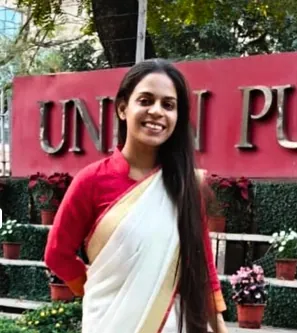
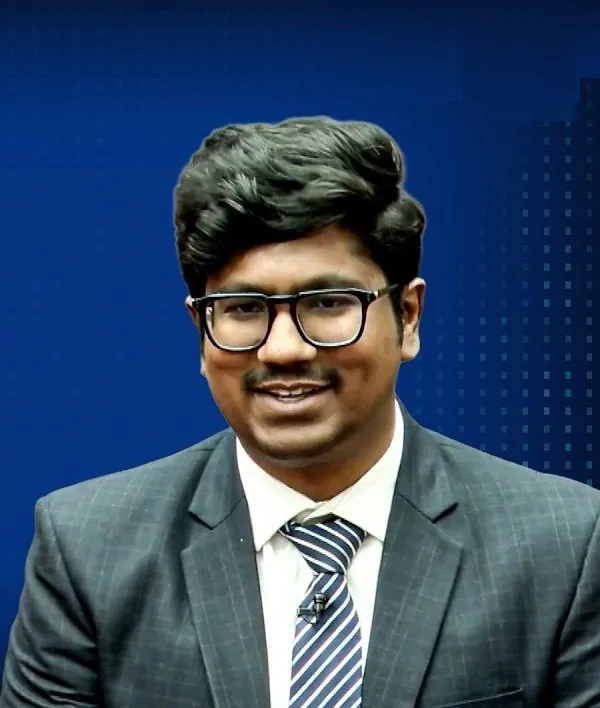
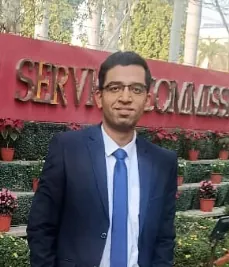
Mentored aspirants who reached the final list
Direct academic mentorship under Dr. Anurag Agarwal for the UPSC CSE Optional and Essay.
Everything for the Optional, in one programme.
Full Paper 1 & 2 coverage
Every text in the UPSC syllabus, from Shakespeare and Milton to Naipaul and Ramanujan, with the literary movements of each period.
1-on-1 red-pen evaluation
Every answer copy is evaluated personally by Dr. Agarwal, with line-by-line feedback on what is missing and how to structure it.
PYQs with every topic
Previous years' UPSC questions are discussed topic by topic, along with the syllabus.
7 hard-bound volumes
History of English Literature, Paper 1, Paper 2 and Literary Terms, plus 200 extra pages of Q&A, posted anywhere in India.
Free booklet of 10 solved PYQs
Solved by Dr. Agarwal, from different years, sent to you on WhatsApp.
Online, anywhere in India
Classes on the OSN Academy app: Android, iOS, tablet, desktop and laptop. Direct WhatsApp and phone support from our team.
Clear fee before you talk to us.
No hidden charges.
Optional course
- 1-year course, online classes (Android, iOS, laptop)
- Complete Paper 1 & Paper 2 syllabus, with PYQs discussed topic by topic
- 1-on-1 answer evaluation by Dr. Agarwal
- For UPSC CSE 2026 / 2027
Study material
- History of English Literature – 2 volumes
- Paper 1 – 2 volumes · Paper 2 – 2 volumes
- Literary Terms – 1 volume
- Plus 200 extra pages of questions & answers for the full syllabus
- Sent by post anywhere in India within 4–6 days
UPSC English Literature Optional syllabus
Paper 1 covers 1600–1900 (classics to the 19th century). Paper 2 covers 1900–1990 (modernism and Indian writing), with critical perspectives applied to Mains answer structure.
Paper 1 (1600–1900) · Section A – Poetry & Drama
- William Shakespeare: King Lear, The Tempest
- John Donne: Canonization; Death be not proud; The Good Morrow; On his Mistress going to bed; The Relic
- John Milton: Paradise Lost, Books I, II, IV, IX
- Alexander Pope: The Rape of the Lock
- William Wordsworth: Ode on Intimations of Immortality; Tintern Abbey; Three years she grew; She dwelt among untrodden ways; Michael; Resolution and Independence; The World is too much with us; Milton, thou shouldst be living at this hour; Upon Westminster Bridge
- Alfred Tennyson: In Memoriam
- Henrik Ibsen: A Doll's House
Paper 1 (1600–1900) · Section B – Novels
- Jonathan Swift: Gulliver's Travels
- Jane Austen: Pride and Prejudice
- Henry Fielding: Tom Jones
- Charles Dickens: Hard Times
- George Eliot: The Mill on the Floss
- Thomas Hardy: Tess of the d'Urbervilles
- Mark Twain: The Adventures of Huckleberry Finn
Paper 2 (1900–1990) · Section A – Poetry & Drama
- W.B. Yeats: Easter 1916; The Second Coming; A Prayer for my Daughter; Sailing to Byzantium; The Tower; Among School Children; Leda and the Swan; Meru; Lapis Lazuli; Byzantium
- T.S. Eliot: The Love Song of J. Alfred Prufrock; Journey of the Magi; Burnt Norton
- W.H. Auden: Partition; Musée des Beaux Arts; In Memory of W.B. Yeats; Lay your sleeping head, my love; The Unknown Citizen; Consider; Mundus et Infans; The Shield of Achilles; September 1, 1939; Petition
- John Osborne: Look Back in Anger
- Samuel Beckett: Waiting for Godot
- Philip Larkin: Next, Please; Deceptions; Afternoons; Days; Mr. Bleaney
- A.K. Ramanujan: Looking for a Cousin on a Swing; A River; Of Mothers, among other Things; Love Poem for a Wife 1; Small-Scale Reflections on a Great House; Obituary
Paper 2 (1900–1990) · Section B – Novels
- Joseph Conrad: Lord Jim
- James Joyce: A Portrait of the Artist as a Young Man
- D.H. Lawrence: Sons and Lovers
- E.M. Forster: A Passage to India
- Virginia Woolf: Mrs Dalloway
- Raja Rao: Kanthapura
- V.S. Naipaul: A House for Mr. Biswas
As per the UPSC Civil Services (Main) syllabus. Both papers also cover the literary movements of each period (Renaissance to Post-Modernism), a compulsory short-notes question and critical analysis of unseen prose and verse passages.
Listen to a free demo before you join.
Real samples of how Dr. Agarwal teaches and evaluates.
King Lear: suffering and redemption
“King Lear is a tragedy of human suffering, moral blindness and spiritual regeneration. Discuss Shakespeare's treatment of suffering and redemption in the play.”
Dr. Agarwal explains how to answer this Paper 1 question: how Lear changes from a proud, angry king into a humble man through his suffering, from the storm scenes to his reunion with Cordelia (Act 4, Scene 7).
A real essay, evaluated by Dr. Agarwal
Our start may be a matter of chance, but our finish depends on our character.
All 10 pages with red-pen comments in the margins and the final score. The student's name has been removed.
Watch Dr. Agarwal teach.
English Literature Optional: Who Should Take ItSuccess rate & syllabus · 29 min
Answer Writing for English Literature OptionalUPSC & PCS Mains · 84 min
English Literature: DramaDr. Anurag Agarwal · 62 min · 3 lakh+ views
10 years of official Paper 1 & 2 question papers
Papers from the UGC NET exams held from December 2018 onwards are not on the UGC NET archive. Ask us and our team will help you with recent papers.
Ask on WhatsAppQuestions students ask before joining
Are the classes online or offline?
Online. Classes run on the OSN Academy app, which works on Android, iOS, tablet, desktop and laptop, so students anywhere in India can join. Answer evaluation is done 1-on-1 by Dr. Agarwal.
I am from an Engineering, Science or Commerce background. Do I need a prior Literature degree?
No prior literature degree is required. Dr. Agarwal has taught many engineers and students from other backgrounds who chose English Literature as their optional. You first build the foundation – how English literature developed across the periods in the syllabus – and then move to the texts, critical perspectives and answer writing.
How is my answer writing evaluated?
You write answers and Dr. Agarwal evaluates them 1-on-1 with red-pen feedback on what is missing and how to structure it. A candidate selected in UPSC CSE 2022 said this took her 10-mark answers from four points to eight. Message on WhatsApp to ask about the current turnaround time for evaluated copies.
What study material do I get?
7 hard-bound volumes (History of English Literature – 2, Paper 1 – 2, Paper 2 – 2, Literary Terms – 1) plus 200 extra pages of questions and answers for the full syllabus, sent by post anywhere in India within 4–6 days. You also get a free booklet of 10 solved PYQs. You can ask for sample pages on WhatsApp before you join.
Are previous years' questions (PYQs) covered?
Yes. PYQs are discussed with every topic along with the syllabus, and you can get a free booklet of 10 PYQs solved by Dr. Agarwal (from different years) on WhatsApp.
What score is possible in English Literature Optional?
Navneet Kaur scored 276 out of 500 in the optional (Paper 1: 133, Paper 2: 143) and secured AIR 111 in UPSC CSE 2025 under Dr. Agarwal's mentorship. Your score depends on your own preparation; the programme focuses on textual depth, critical perspectives and answer structure.
What is the fee?
The 1-year online course is ₹31,500. The study material (7 hard-bound volumes) is ₹6,500. No hidden charges.
When can I join?
The current batch has already started and admissions for UPSC CSE 2026 and 2027 are open. Message us on WhatsApp to ask about joining.
Get the batch details and your free PYQ booklet.
Share your name and number. Our team will send the batch details and the booklet of 10 solved PYQs on WhatsApp.